Business Strategy & Risk Management

US tariffs flip-flops are forcing EU businesses to rewrite their trade playbook

Scott McConnell, Chief Sales & Marketing Officer @Creditsafe Group

8 Mins
30/07/2025

Whether you're an automotive parts maker in Germany, a heritage whiskey manufacturer in Ireland or a cheese factory owner in France, one thing's clear: businesses across Europe, big and small, are being forced to rethink their supply chains and make strategic pivots to protect themselves in light of the ‘liberation day’ tariffs imposed by the United States.

Among the targets of reciprocal tariffs, China stood in a category of its own—at one point facing punitive rates as high as 145% in a prolonged trade war. But the European Union isn’t far behind on Washington DC’s radar. However, the US tariff policy towards the EU is much like a winding mountain road. From 20% it went to 10% to give negotiations time. There was a brief threat of 50% only to push 30% forward again. It looks like it will be 15%, although many European member states are not happy with that. But it shows that even geopolitical allies aren't off-limits.

This continuous cornering saddles EU companies with various restrictions and puts economic pressure on them. The fears of reduced market access and trade with the US have already set the markets swinging like a pendulum, opening doors for inflation to rear its ugly head again and accelerating the push toward nearshoring and reshoring their trade bases. 

But the impact isn’t evenly spread.

To understand how this tariff shock is being absorbed, two months since they were announced, we analysed Creditsafe's credit reports usage and company monitoring data, used by over 110,000 businesses across Europe to make decisions. These data provide a unique window into trade behaviour: when companies view credit reports on potential partners, it signals their heightened due diligence and risk assessment needs. These views typically surge globally during periods of economic uncertainty, like a recession or tariff-induced trade war, serving as an early indicator of how businesses are making decisions on who to onboard as a reliable, risk-free customer and supplier.

How US Credit Report views spiked in April 2024, soon after the tariffs were announced across all major EU economies.

Our findings suggest a fascinating pattern: while some EU businesses are moving swiftly with contingency plans to cushion immediate trade losses, others may be using this disruption as a catalyst for uncomfortable yet strategic moves to reduce long-term trade dependencies with the US. These businesses are not just reacting; they appear to be repositioning entirely. 

Here’s a brief low-down into the most impacted sector in major EU markets:


Chapter 1

Policy chills across German automaking

The views on US credit reports spiked upto 200% across some EU regions after the announcment of liberation day tariffs in April 2024

The views on US credit reports spiked up to 200% across some EU regions after the announcement of liberation day tariffs in April 2024.

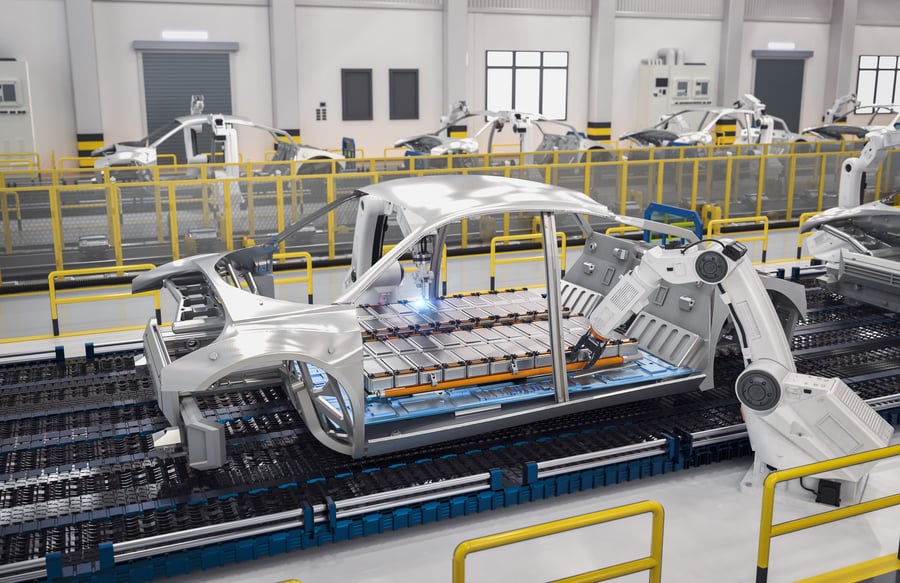
Earlier this year, Arnd Franz, CEO of German automotive giant Mahle, issued a stark warning: global car production is grinding to a halt under the pressure of tariffs compounded with bans on German combustion engines. With major trade agreements stalled, factory lines frozen across North America, and clients slashing orders, the industry is already teetering on the edge of a slowdown. The trade turbulence is evident in the behaviour of German businesses which are keeping a much closer eye on both existing and prospective U.S. clients and suppliers.

Our data shows a sharp 196% surge in credit report views on U.S. companies by German businesses in April 2025, soon after the tariff news got out: potentially indicating heightened risk awareness and a more cautious approach to trans-Atlantic trade.

German automakers now face a narrowing set of strategic options: absorb the cost, ramp up production on U.S. soil, or pivot toward friendlier shores. What was once frictionless access to a market that consumed over €38.9 billion worth of German vehicles and parts last year is now fraught with uncertainty.

Our credit report usage data could point to German businesses beginning to consider a renewed push to diversify exports, with markets like Mexico, Japan, and South Korea emerging as key alternatives. In April 2025 alone, report views on alternative markets meteorically surged compared to the same period last year: up 26.9% for Mexican firms, 45.7% for Japanese businesses, and a staggering 232.7% for South Korean companies. It’s not too much of a stretch to understand why diversification could no longer be a long-term strategy; it’s an immediate response to geopolitical risk.

Chapter 1

Heritage brands brace for impact in Ireland

US tariffs - impact Ireland

Guinness, a heritage Irish beer brand is set to experience a sharp decline in demand, profits and employment due to the liberation day tariffs.

What’s more telling is where attention is shifting: report views on ASEAN markets (except for the Philippines and Brunei) have nearly doubled compared to 2024.

Ireland’s food and drinks exporters are scrambling for options to navigate the new terrain. Last year, Irish food and drink exports to the US amounted to over €1.9bn, with dairy at €830m and whiskey at €900m – the two major export sectors largely bearing the brunt of the new tariffs. Kerrygold, the second-best-selling butter brand in the US, and Guinness beer are some of the heritage brands experiencing a sharp decline in demand, profits, employment, and much more in lieu of the tariffs.

Market watchers are already mapping out the economic fallout if tariffs go ahead—projecting a 3% drop in employment, a 5% hit to exports, and a 1.8% rise in government debt compared to a no-tariff scenario. 

Irish businesses aren’t waiting to be blindsided. Our credit report usage data shows that in 2025 alone, Irish businesses’ credit report views on U.S. clients and suppliers spiked by 38%—a possible sign that due diligence is ramping up fast.

But what’s more telling is where attention could be shifting: report views on ASEAN markets (except for the Philippines and Brunei) have nearly doubled compared to 2024, possibly pointing to the expansion of exporting opportunities in these markets. From Singapore to Vietnam, Thailand to Malaysia, Irish firms may be scanning new ground, hedging against trade turbulence by scouting alternatives for market expansion in Southeast Asia.

Chapter 1

French businesses adopt a less exposure, high resilience approach

US tariffs - impact France

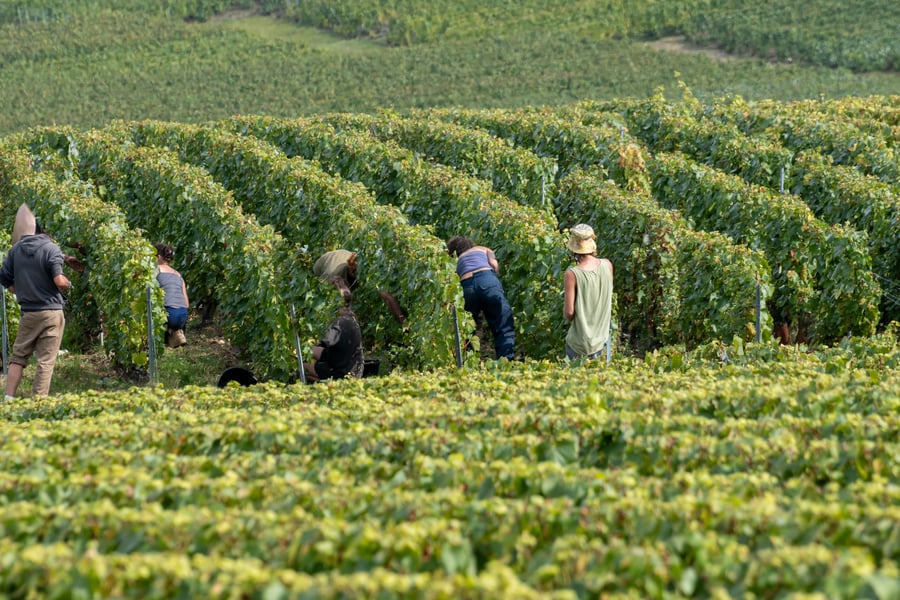
French winemakers may lose up to a quarter of their annual revenue that originates from the US market to constant flip-flops in tariffs.

French businesses occupy a relatively sheltered position in the tariff storm. With just a 1.1% GDP exposure to U.S. tariffs (well below Ireland’s 9.7% and Germany’s 2.21%). France has been spared the worst of the trade fallout. That buffer comes largely from its strong intra-EU export ties and a more domestically anchored, less export-reliant economy. Creditsafe’s monitoring risk data may reflect the broader trend toward intra-European trade.

French businesses ranked among the top three most monitored economies by key European trade hubs, including Italy, Belgium, Germany, the Netherlands, and even the UK. At the same time, French firms steadily increased their own monitoring activity across these same markets. This may signal a deliberate tightening of regional trade ties, as businesses double down on familiar, lower-risk partners within Europe to hedge against external volatility, particularly from the U.S. tariff agenda.

But not all corners of the French economy are shielded from the tariff fallout. Regions like Burgundy, home to many of France’s iconic winemakers are feeling the strain. Unlike other sectors, French wine is deeply exposed: the US accounted for a quarter of France’s wine exports last year, making the industry especially vulnerable to shifts in American trade policy.

Chapter 1

Re-engineering supply chains for Dutch steel and tech

US tariffs - impact Netherlands

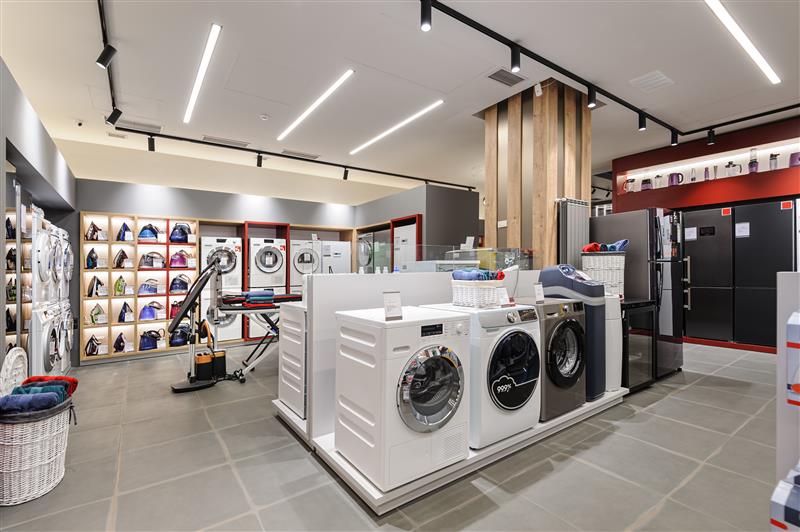
Philips, a major manufacturer and distributor of Electronics has begun localising much of its China-sourced imports into the US.

In the Netherlands, the tariffs aren’t just a headline—they’re cutting directly into the core of Dutch industrial output. The Netherlands is at the heart of transatlantic supply chains and one of the least insulated economies from the fallout of the U.S. tariffs. Its role as a major logistics and distribution hub leaves it highly exposed, especially in its manufacturing sector. With 25% tariffs now applied to steel, aluminium, cars, and car parts, and with a potential 50% spike, the sector is already feeling the strain. Dutch GDP has dipped by an estimated 1%, and further slowdown is expected as exports weaken and investment dries up.

Our credit report usage data may signal a sharp rise in caution among Dutch businesses, with a 43% increase in U.S. company report views in 2025 compared to the previous year, possibly indicating heightened scrutiny of American suppliers and customers. On the flip side, US businesses are also taking a closer look, with a 23% uptick in monitoring Dutch partners. This may suggest that trust is being stress-tested on both sides of the Atlantic, leading transatlantic trade to slowly change its supply and distribution course.

For major Dutch multinationals like Philips, the US remains a critical market. However, their American exports are feeling the strain too —not just from EU–U.S. trade tensions, but also from escalating geopolitical rivalries between US and China. In response, Philips has begun localising much of its China-sourced imports into the US, amped up production of products like Respironics breathing masks, electric shavers, and toothbrushes within the US, and adjusted prices to absorb costs from the tariffs. Soaring supply chain costs across both hubs have forced the company to adopt emergency pricing measures and fast-track supply chain adjustments to stay competitive.

Chapter 1

Belgian chemical and pharma firms prepare for contingency plans

US tariffs - impact Belgium

Belgian exports to the US surged up to 46% when President Trump announced the tariffs.

Brussels and Washington DC may speak in diplomacy, but tariffs tell a different story. For many Belgian businesses, it’s no longer business as usual since the day that tariffs were first announced.

Belgium's pharmaceutical and chemicals sectors face the steepest tariff impact. When President Trump announced on March 25 that the EU could face tariffs up to 200% for failing to modify trade policies he deems economically harmful to the US Since then, Belgian exports to the U.S. surged 46% compared to the previous year and more than doubled February's figures—with pharmaceutical shipments driving the majority of this rush. Companies weren't waiting for formal tariff implementation; they were front-loading exports while the window remained open.

In response, companies are lobbying through trade bodies, diversifying into new markets, and streamlining operations to offset the financial impact.

US drug price reduction policies pose a significant threat to Belgium’s pharmaceutical industry, which relies heavily on exports to the American market. With proposals to benchmark US drug prices to lower-cost countries, Belgian firms face shrinking profit margins and declining export revenues. This puts pressure on R&D investment, risks job losses, and could weaken Belgium’s position as a European pharma hub. In response, companies are lobbying through trade bodies, diversifying into new markets, and streamlining operations to offset the financial impact.

But there are still companies where the scare is well underway. Huyghe Brewery immediately sent its entire stock of Delirium to the US after the threats. The shipment represented the production of two months and included some 20 containers. Huyghe Brewery derives almost a quarter of its 51 million euro turnover from the US. Nerves are also tight at other breweries such as Lindemans, Chimay, Sint-Bernardus and Duvel Moortgat.

Our credit report usage data may point to a growing uncertainty in the Belgian economy toward US suppliers and customers, with a 113% surge in US credit report views this April, when compared to the same time last year. This spike follows consecutive 10-20% increases over 2021, 2022, and 2023, potentially signalling how Belgian businesses may be plotting their next strategic shift: one where caution, contingency planning, and diversifying export markets will be the new normal.

Chapter 1

Italian luxury goods and automakers adjust prices to cope

US tariffs - impact Italy

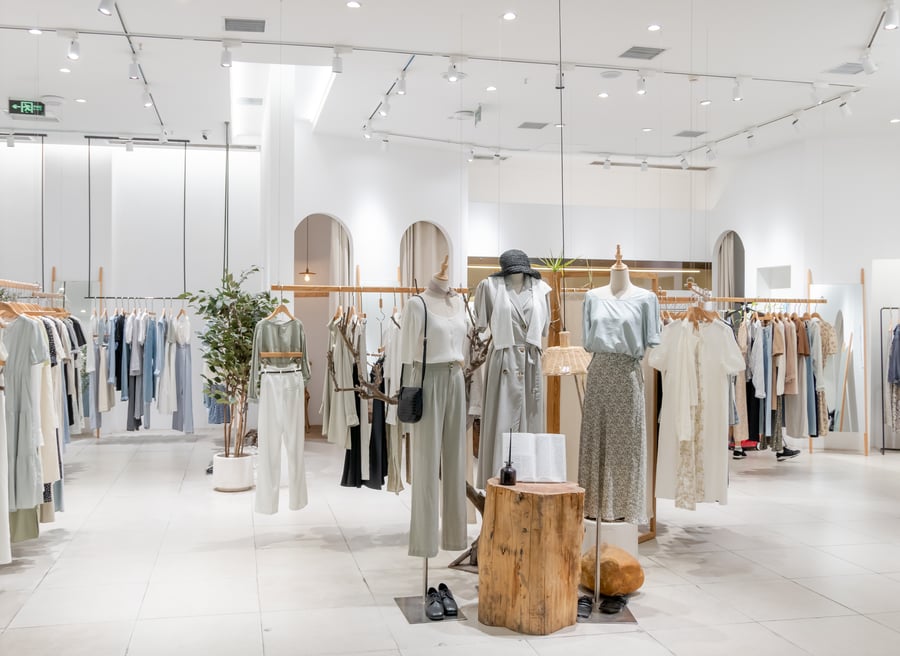
Italian high-end fashion brands choose between shifting production base to friendlier ASEAN countries like India and Vietnam or adsorbing the tariff costs altogether by hiking up prices.

No one is spared in the tariff trade war, and some iconic Italian brands and businesses are a testament to this. From high-end automakers adjusting price tags to luxury fashion brands seeing a sharp drop in demand, the financial toll is becoming increasingly clear. Paired with mounting losses in wine and cheese exports, the ripple effects of the tariffs compounded are pushing Italy’s global brands to rethink their pricing strategies, market focus, and supply chain resilience. The sectors facing most of the tariff blows are:

  • Automotives: Much like the German automotive industry, the possible 25% tariffs on EU-produced cars and car parts have set off Italian automakers in a frenzy. A 25% tariff could raise the cost of exported vehicles by approximately €101.5 million, potentially triggering a 15–20% decline in demand and slashing export revenues by €61–81 million. This has triggered luxury auto giants like Ferrari to increase prices to compensate for the lost revenue on tariffs. Other brands like Stellantis are preparing for the severe plunge in demand following the hike in prices due to tariffs.
  • Wine and cheese exports: Similar to France, Italian food products like Parmigiano Reggiano and olive oil as well as wine are a part of heritage exports that amount to up to €2 billion but now face a potential €500 million loss due to the tariffs.
  • Luxury goods exports: Italy’s luxury industry, producing handbags, shoes, fashion items, and wine among other prized goods, is also highly exposed to the U.S. market. Fashion is Italy’s second largest industry and many of its heritage luxury brands credit American exports for up to a quarter of their overall revenue. Forbes reported that Prada, for example, generated some 17% of its revenues in the Americas last year, Moncler relied on the US market for 14%; while Gucci owned by Kering, attributed 24% of its profits to American exports.

For these luxury behemoths, it isn’t just the aspiration buyers or the regular consumers but also the high-net-worth individuals who may be backing out of bookings with apparent fewer accessory and jewellery splurges – hinting at lowered consumer demand from all segments of their sales base.

A graph showing the contrast between how the credit reports views on ASEAN countries (Singapore, Malaysia, Indonesia, Thailand, Vietnam, Cambodia- excluding the Philippines, Brunei and Myanmar) spiked in April 2025 compared to April 2024.

Our credit report usage data show an 11% rise in views of US business reports by Italian companies. More strikingly, April 2025 saw sharper increases in interest toward India (up 19%), Mexico (9%), and ASEAN countries (43%) — figures that appear to outpace those of most EU peers. This trend could signal a strategic pivot by Italian businesses toward these regions as alternative hubs for production, sourcing, and customer growth amid the disruption caused by new US tariffs.

This shift aligns with recent messaging from Italy’s Ministry of Foreign Affairs and International Cooperation, which has emphasised the dual need to reinforce traditional ties with European and American markets while proactively expanding into high-potential emerging economies across Asia, Latin America, and Africa.

Chapter 1

What does it mean for EU businesses for the rest of 2025?

Companies that adapt quickly, especially those already visible in our data as early movers toward alternative markets, will likely emerge stronger and more resilient.

To a certain extent, the data says it all. European businesses are not merely weathering this tariff storm, they appear to be using it as a catalyst for fundamental strategic transformation. The sharp surge in interest for credit reports from markets across Asia and Latin America may point to a shift in the mindset of European companies, looking to aggressively diversify and counter the inevitable drop in demand from the US. 

What seems to be emerging is a new European business paradigm: one where geographic diversification isn't just smart strategy but increasingly seen as essential for survival, where finding strong customer bases may take precedence over cost optimization, and where even traditional allies can no longer be taken for granted in an increasingly fragmented, protectionist global economy.

Regardless of how the legal battle unfolds, the strategic pivoting among European companies is already well underway. Companies that adapt quickly, especially those already visible in our data as early movers toward alternative markets, will likely emerge stronger and more resilient.

For many, the era of predictable transatlantic trade may be over. The future belongs to those agile enough to navigate an increasingly complex and protectionist global trade landscape.


Offering online company credit reports & information on more than 430 million companies across 200 countries wordwide, and monitoring in more than 40 countries, GraydonCreditsafe provides the most accurate and up-to-date business information available in a user-friendly and uniform format for companies of all sizes. Would you like to know more about our international business information? Then contact us right away.


About the author, Scott McConnell

Scott McConnell, Chief Sales and Marketing Officer, Creditsafe Group

Scott McConnell is the Chief Sales and Marketing Officer at Creditsafe Group, where he leads the global vision and strategy for the Group’s Sales, Marketing, and Sales Operations functions, supporting 16 local Creditsafe entities worldwide. With a strong focus on delivering impactful results for clients at scale, he plays a pivotal role in driving commercial momentum across the business.

A vocal advocate for digital transformation, Scott champions the adoption of disruptive technologies and cloud-based solutions within modern sales and marketing teams. He is also recognised for his strategic insights into how political shifts influence the EU and Irish economies.

Scott holds a BA (Hons) from University College Dublin and a Graduate Diploma in Management Studies from the Institute of Commercial Management. His professional credentials include a range of respected sales qualifications from Miller Heiman, ASLAN, Evolve, JAWS (London Management Consultants), and Spence & Associates.