In July, the Love Tomorrow Summit took place in Boom, the annual crossroads where music, innovation and social issues meet. In between the performances and artistic installations, GraydonCreditsafe organised a panel discussion on a theme that can no longer be ignored: sustainability.
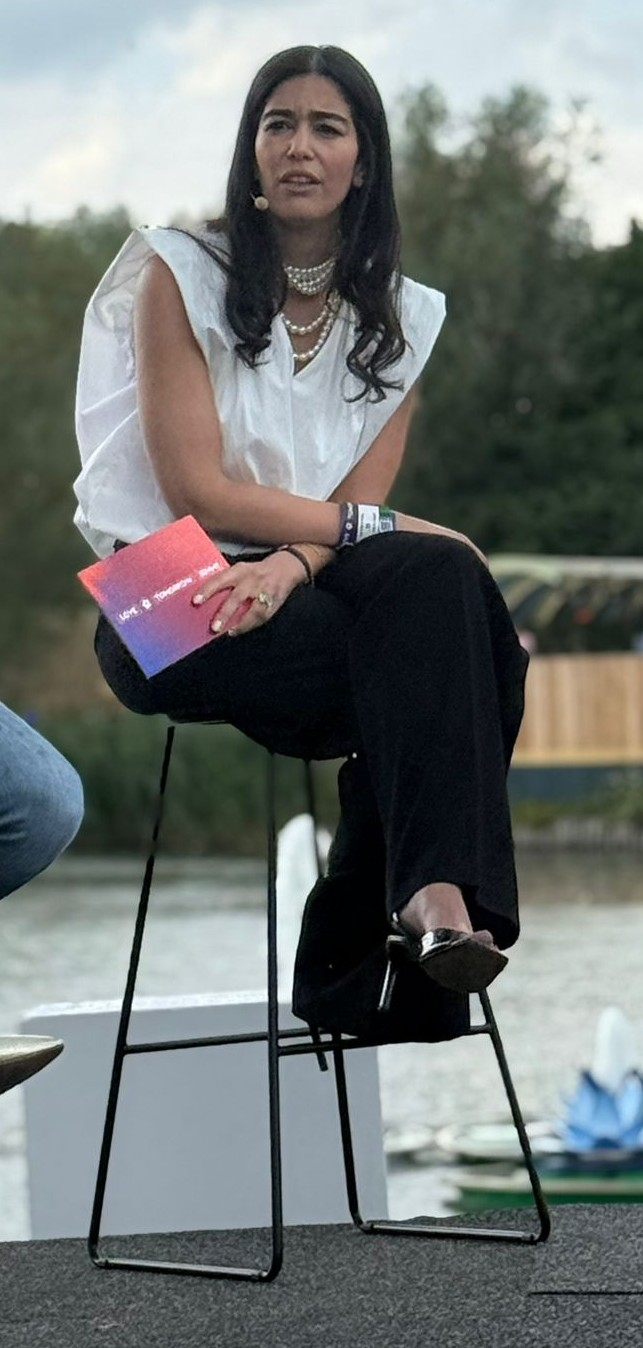
Under the direction of our colleague Hind Salhane, four guests from different corners of society took the stage: Barbara Van Speybroeck (Communication Director and member of the Management Committee at Assuralia), Karla Basselier (CEO of Fedustria), Thierry Geerts (CEO of BECI and former Country Director of Google)) and Professor Peter Verhezen (international expert in governance, ethics and sustainability).
Together, they searched for answers to an urgent question:
-
How do we make sustainability feasible, structural and liveable – both economically and socially?
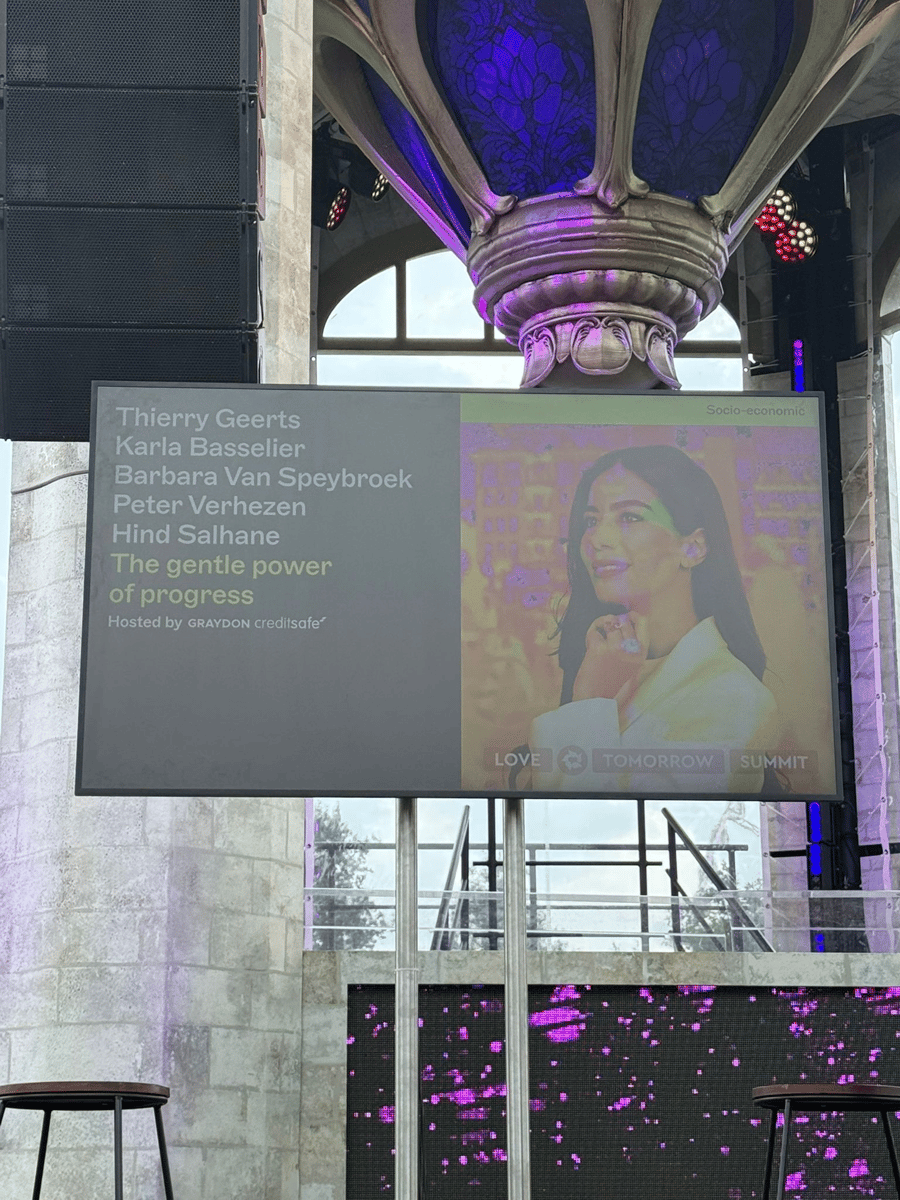

Barbara Van Speybroeck
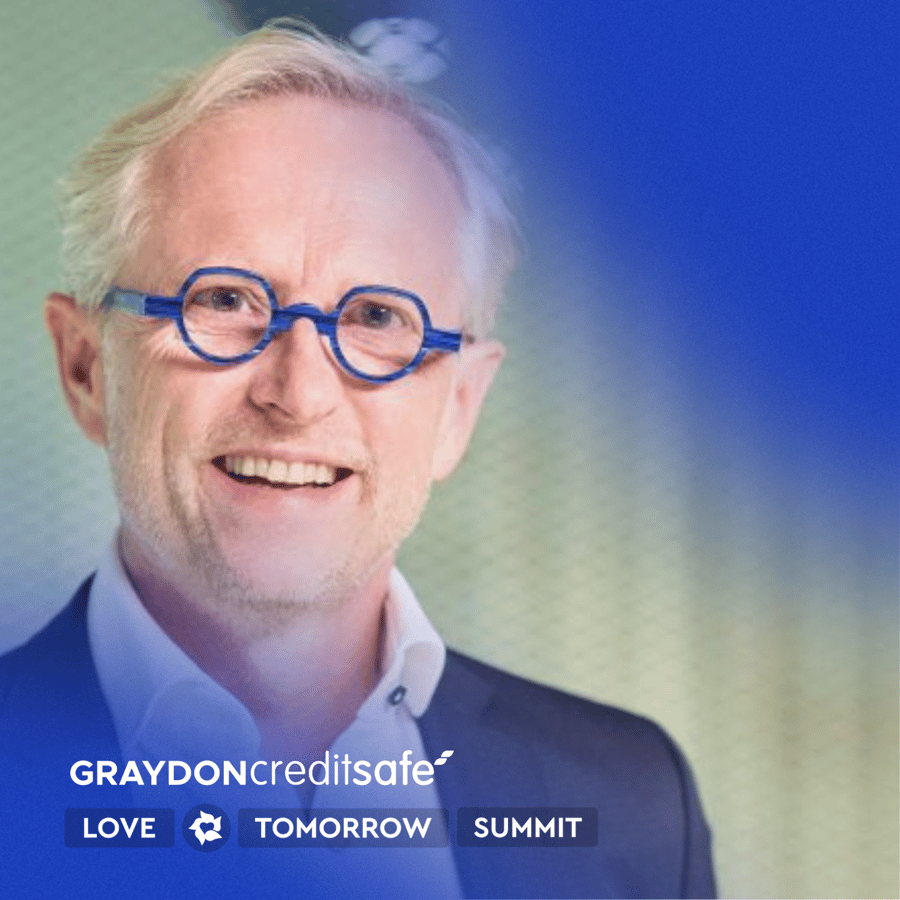
Thierry Geerts
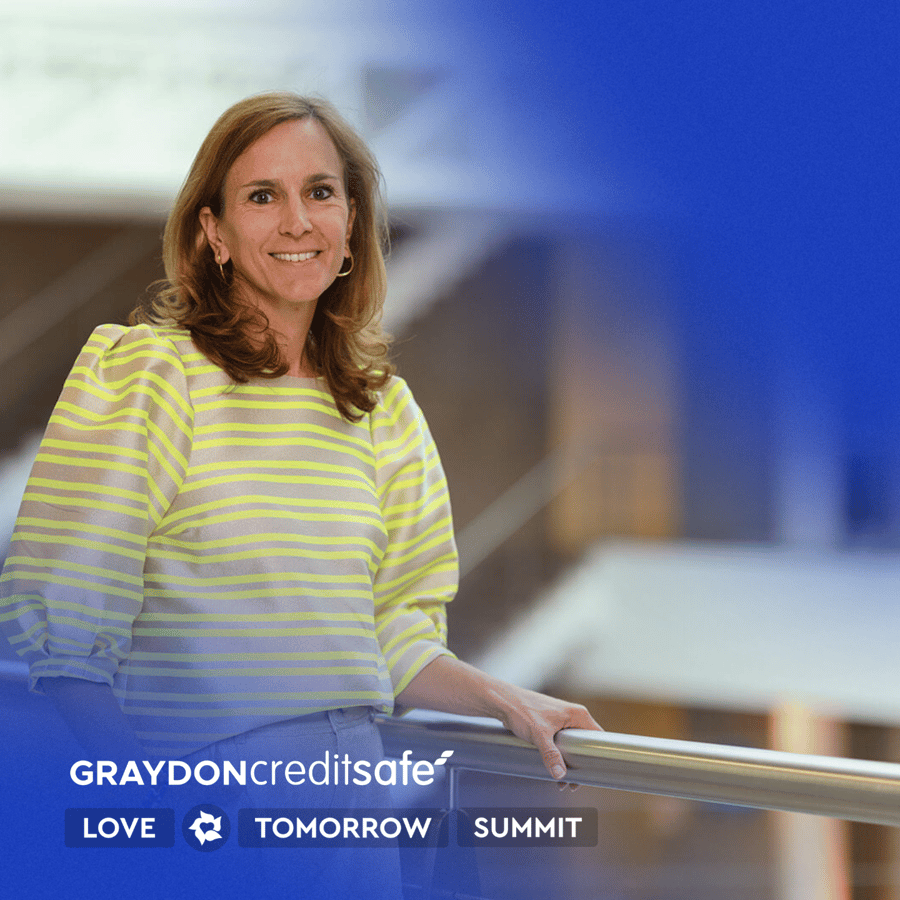
Karla Basselier
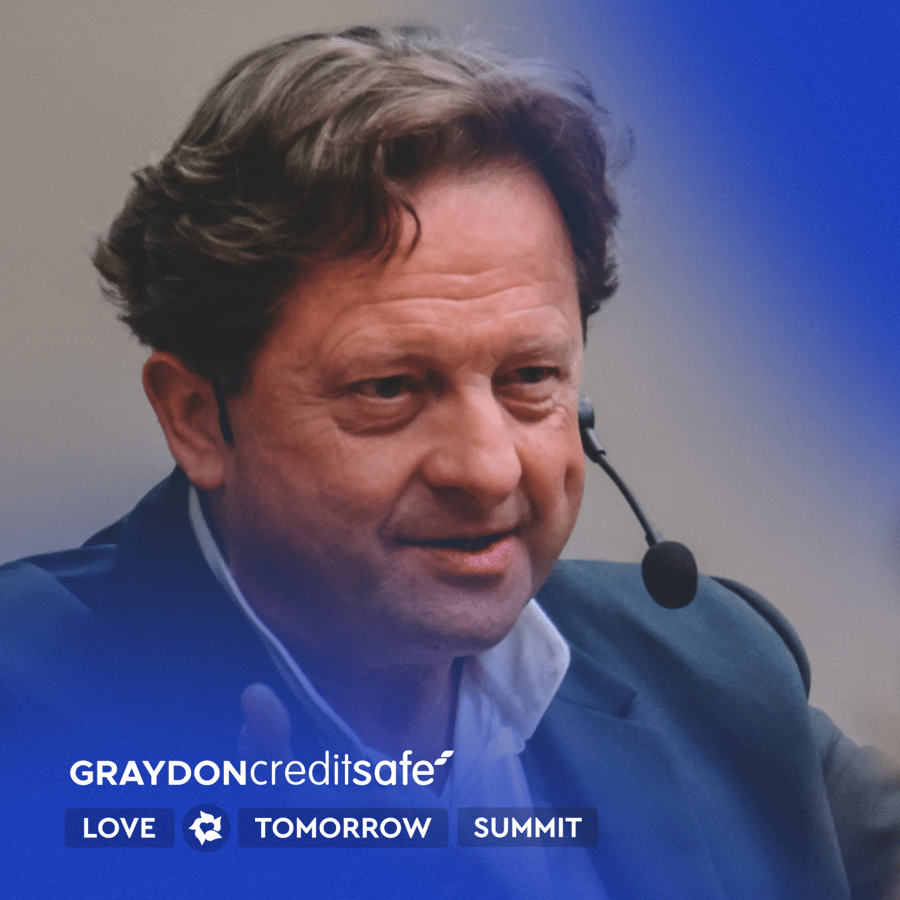
Peter Verhezen
Risks in a changing world
“What used to be local is now global. What used to be rare is becoming increasingly common.” With these words, Barbara Van Speybroeck outlined the shifting risk landscape. In her role at Assuralia, she sees daily how insurance is being strained by the speed and scale of climate change.
Traditional insurance models are based on predictability and statistics. Yet in an age when wildfires, floods and storms follow one another at an ever-faster pace, the old models are no longer tenable. “The real risk,” Barbara argued, “is failing to adapt.”
That is why she argues for a radical change of course: from risk transfer to risk transformation. Insurers should not only pay out after a disaster but also invest in prevention and in infrastructure resilient enough to withstand shocks. They can also reward sustainable behaviour: companies investing in circular models or climate adaptation should be offered more favourable terms.
It is a vision that no longer sees insurance as a safety net, but as a driver of sustainable innovation.
Industry between regulation and reality
Where Barbara speaks from the logic of risk, Karla Basselier starts from the reality of factory floors and value chains. As CEO of Fedustria, she represents a sector under heavy pressure: manufacturing must become greener, while facing rising costs, international competition and a flood of new laws and regulations.
“The European Green Deal has set a bold ambition,” Karla acknowledged. “But the way regulation was imposed on companies was too fast, too complex and insufficiently predictable.”
According to her, the solution lies in smart legislation: frameworks that provide long-term certainty and stimulate circularity, without stifling companies. She illustrates this with the recycling targets for textiles. By 2030, the sector must incorporate 50% recycled material. “We cannot achieve that alone. We need a recycling industry that grows alongside us, and consumers willing to play their part.”
And that is where the problem lies: according to surveys, more than 80% of consumers want to behave sustainably, but barely 10% are willing to pay more for circular products. Karla’s appeal was therefore both concrete and confronting. She named the issue directly: “Stop buying from Temu and Shein. Buy local, buy European.”
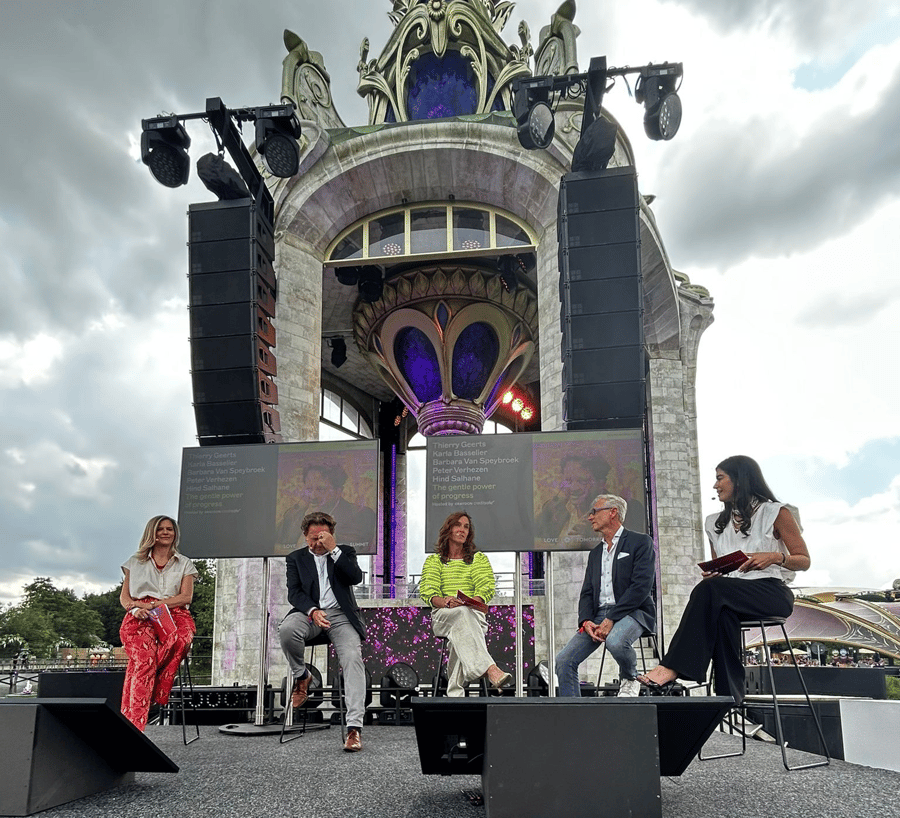
From left to right: Barbara Van Speybroeck, Peter Verhezen, Karla Basselier, Thierry Geerts and Hind Salhane.
Technology as a lever, but with a compass
While industry and insurance focus on risks and frameworks, Thierry Geerts emphasises the role of technology. From his experience at BECI and Google, he sees daily how digitalisation can propel companies forward.
“The problem of sustainability is too complex for humanity,” he argued. “Whether it concerns weather forecasts, production processes or material management: only with technology and AI can we truly grasp the complexity.”
But Geerts also warns against overestimation. Generative AI and chatbots are not the same as the AI that makes production processes more efficient or reduces energy consumption. On the contrary, generative AI and chatbots consume a huge amount of energy. This is not about gadgets, but about applications that enable companies to structurally reduce their ecological footprint.
“With AI, companies can cut their footprint by as much as 30%,” said Geerts. “Not overnight, but within three to five years.”
Yet technology is not a free pass. Without clear timelines and achievable regulations, European companies risk being outcompeted by regions where sustainability is not a priority. And that could undermine the entire transition.
Governance: choosing the future
The fourth voice in the panel, Professor Peter Verhezen, brought the ethical and governance perspective. For him, sustainability ultimately comes down to one question: what future do we want to actively create?
“AI is not going away,” he stated bluntly. “But governance determines how we deploy it. It is not about technology itself, but about the choices made by CEOs and politicians who steer the algorithms.”
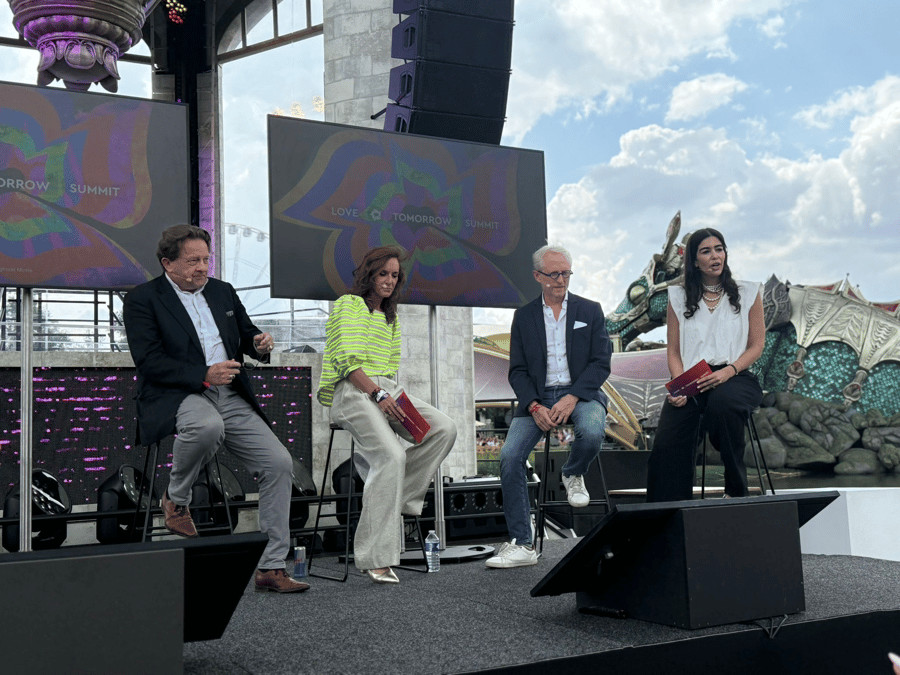
Verhezen stresses that governance is more than compliance and reporting. It is the art of deciding in which direction an organisation moves, and that requires vision, empathy and imagination. “Creativity and critical thinking are deeply human. And it is precisely these qualities we need to make sustainability a reality.”
His plea? Invest in wisdom rather than mere efficiency. Companies focusing only on the short term and on cost-cutting will lose their licence to operate. “Sustainability is not perfection,” Verhezen concluded, “it is progress with courage.”
Between hope and realism
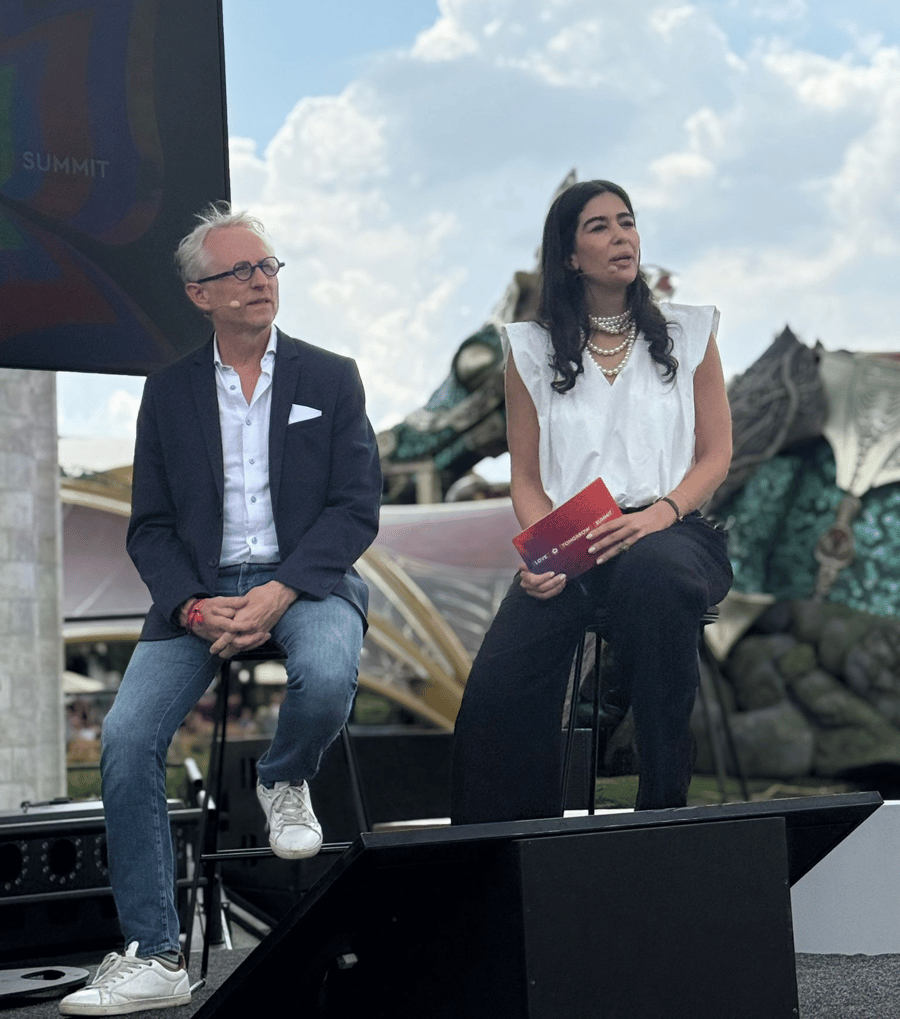
What made the panel remarkable was the way the four perspectives complemented one another. Barbara pointed to the limits of insurability, Karla stressed the need for smart legislation and cooperation, Thierry highlighted technology as a lever, while Peter emphasised the importance of ethics and governance.
The common thread? Uncertainty is inevitable, but cooperation makes transition possible.
Or, as Barbara Van Speybroeck put it: “The greatest barrier is not resistance, but uncertainty. And that is something we can tackle together.”
Conclusion: the gentle power of progress
Moderator Hind Salhane closed the discussion with a clear summary:
“Sustainability does not need to be perfect. It requires courage, cooperation and a long-term perspective. That may be exactly what the world needs right now: not empty promises, but the quiet force of progress.”
The Love Tomorrow Summit reminded us that sustainability is no longer a side issue. It is the very core of entrepreneurship and the essence of doing business. The choices we make today will determine what future is still possible tomorrow.