UK business compliance explained

A practical guide to navigating UK compliance requirements

The UK is one of the most attractive countries for business, with PWC ranking it second for global investment.

Despite this, the regulatory landscape is becoming increasingly complex, with numerous regulators, new systems implemented post-Brexit, and technology moving faster than legislation can. 

As a result, businesses need to be agile. This guide explains everything businesses need to know about compliance, including anti-money laundering (AML), Know Your Customer (KYC), customer due diligence (CDD), enhanced due diligence (EDD), sanctions screening, right-to-work checks, ultimate beneficial owner (UBO) verification, and ongoing risk monitoring.

Business Risk Indicators

Chapter 1

What is business compliance?

Business compliance refers to the policies and controls an organisation implements to meet legal and regulatory obligations. Its aim is to ensure businesses are operating responsibly, protecting both the business itself and its customers.

Compliance requirements for businesses vary by industry but commonly include:

  • Anti-money laundering (AML) regulations
  • Know Your Customer (KYC) and Know Your Business (KYB) requirements
  • Customer Due Diligence (CDD)
  • Ultimate Beneficial Owner (UBO) verification
  • Sanctions and politically exposed persons (PEP) screening
  • Employment verification checks
  • Right to Work requirements
  • Right to Rent requirements
  • Data protection and privacy legislation
  • Ongoing monitoring and record keeping

Chapter 1

Why is compliance important?

Compliance is often seen as an obligation, and, for many, even a burden. However, there are a variety of benefits beyond the legal requirements: 

Reduces financial crime risk

Criminals will often target businesses with weak compliance controls, as it’s easier for them to slip through the net. Conducting thorough checks such as anti-money laundering (AML) and identity verification helps businesses identify bad actors before they become a problem. 


Protects reputation

Customers, suppliers and key stakeholders all expect the businesses they interact with to operate responsibly, so that their data is protected and they continue to receive either the goods and services they’ve purchased, or the money they are owed. 

A compliance failure damages confidence in a business, which often has long-term consequences such as loss of revenue or lack of investment. Ensuring that everyone who plays a part in the business is legitimate is vital to protecting this trust.


Prevents penalties

Sometimes, bad actors manage to gain access to a business or its services. Regulators will want to see in these circumstances whether proper compliance checks were conducted. If they weren't, businesses could face steep financial penalties or even criminal charges.

Businesses should not only ensure they have a watertight compliance strategy, but they should also maintain an audit trail so they can prove that reasonable steps were taken to prevent non-compliance. 


Supports sustainable business growth

As businesses grow, so does their exposure to risk. Entering new markets, engaging with new suppliers, or simply having more customers all come with more opportunities to engage with people who are not who they say they are.

A strong compliance process allows businesses to identify risks early and make more informed decisions, so that they can pursue growth opportunities with confidence.

What firms need to demonstrate regulatory compliance?

Regulated firms undertaking certain financial activities are required to apply risk-based customer due diligence measures to prevent their businesses from being successfully targeted by money launderers or terrorist financiers. Some of these firms include:

  1. Accountancy

  2. Banking & Finance

  3. Credit Institutions

  4. Crypto

  5. Gaming & Gambling

  6. Insurance

  7. Investment

  8. Legal

  9. Real Estate

Chapter 1

Anti-Money Laundering (AML)

What is Anti-Money Laundering?

Anti-Money Laundering (AML) is a term that encompasses the laws and regulations around preventing criminals from using illegally obtained funds under the guise of legitimate income. 

Businesses should have an AML strategy in place to remain compliant with regulations. This strategy should include:

  1. Identifying customers

  2. Verifying identities

  3. Assessing risk

  4. Monitoring transactions

  5. Detecting suspicious activity

  6. Reporting concerns when required

While all businesses should ensure they are compliant with AML regulations, the level of compliance depends on the industry. The financial and legal sectors, for example, have much stricter requirements. Businesses should do their research to understand what checks are required in their industry.

What are AML checks?

AML checks are verification processes used to assess whether an individual or organisation presents a financial crime risk.

Typical AML checks include:

  • Identity verification
  • Business verification
  • Sanctions and PEP screening
  • Adverse media screening
  • Ultimate Beneficial Ownership (UBO) identification
  • Risk assessment
  • Ongoing monitoring

AML checks can be automated using Creditsafe’s solution, improving efficiency and removing the risk of human error. 

Chapter 1

Know Your Customer (KYC) and Know Your Business (KYB)

What is Know Your Customer (KYC)?

Know Your Customer (KYC) is the process of verifying a customer's identity before establishing a business relationship. It helps organisations confirm that customers are who they claim to be and understand the risks associated with them.

KYC forms a critical part of anti-money laundering (AML) strategy, helping businesses reduce financial crime risk while making more informed onboarding decisions.

A strong KYC process should include: 

  1. Identifying customers and verifying their identities

  2. Assessing customer risk

  3. Understanding the purpose of the business relationship

  4. Screening for sanctions and PEPs

  5. Monitoring customers on an ongoing basis

While KYC is most commonly associated with financial services, it’s just as important for any organisation that needs to verify the identity of customers, suppliers, tenants, employees, or business partners.

What are KYC checks?

Typical KYC checks include:

  • Identity verification
  • Address verification
  • Document verification
  • Sanctions screening
  • Politically Exposed Person (PEP) screening

By performing these checks before onboarding, organisations can reduce their risk exposure. Automating these checks can speed up the process from days to minutes.

What is Know Your Business (KYB)?

Know Your Business (KYB) is similar to KYC; however, it looks at businesses rather than individuals. It’s the process of verifying that a company is legitimate and understanding who owns and controls it, and helps organisations confirm the risk level of any individuals associated with it. 

Typical KYB checks include:

  1. Company registration checks

  2. Director verification

  3. Ultimate Beneficial Owner (UBO) identification

  4. Sanctions screening

Did you know?


37% of active UK companies experienced a director change in the past 12 months. 


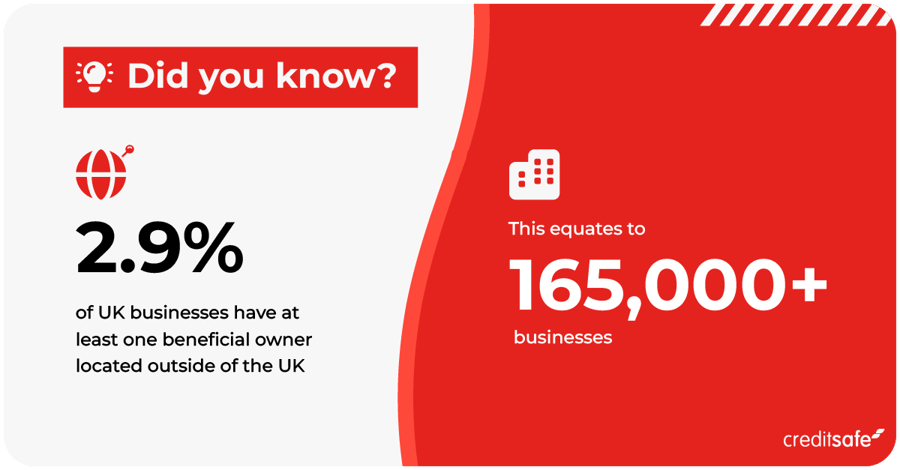
165,000+ UK businesses have at least one beneficial owner located outside of the UK.

Combine your AML and KYC checks with our end-to-end due diligence platform

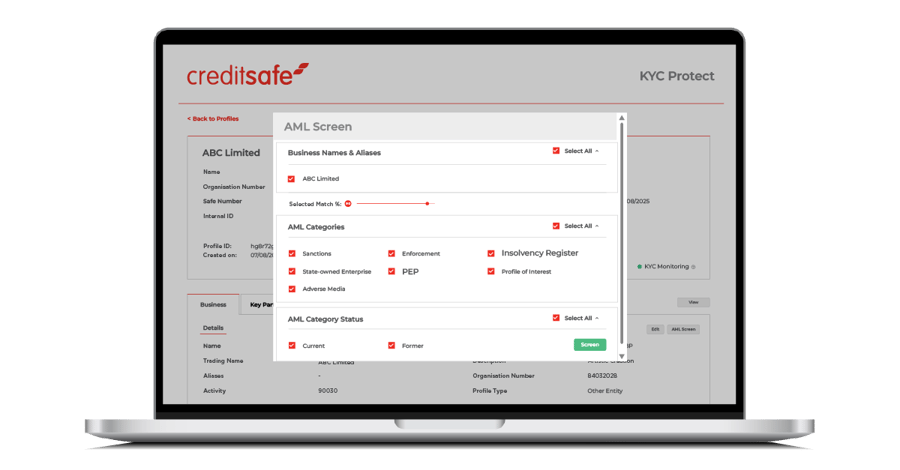
KYC Protect - AML Screen
Streamline your onboarding process, identifying key controllers in seconds and removing the need to work between multiple systems. KYC Protect combines all of the crucial checks you need to do to stay compliant and safeguard your business.

Chapter 1

Customer Due Diligence

What is Customer Due Diligence?

Customer Due Diligence (CDD) is the process of understanding who your customers are and assessing their risk profile. It’s vital to identifying potential risks, such as fraud or criminal activity. 

CDD helps organisations answer key questions such as:

  • Who is the customer?
  • Is their identity genuine?
  • Who ultimately owns or controls the business they represent?
  • What level of financial crime risk do they present?
  • Should Enhanced Due Diligence be applied?

Typical Customer Due Diligence activities include:

Why is CDD important?

Effective Customer Due Diligence helps organisations:

  • Reduce exposure to financial crime
  • Meet regulatory and AML requirements
  • Make informed onboarding decisions
  • Identify high-risk customers earlier
  • Protect their reputation
  • Build trust with partners and stakeholders
  • Support safer and more sustainable growth


What is Enhanced Due Diligence?

Enhanced Due Diligence (EDD) is a more comprehensive level of investigation, used when standard due diligence is not enough and a customer or business relationship presents a higher risk of financial crime.

EDD is commonly required when:

  • A customer is a Politically Exposed Person (PEP), or closely associated with one
  • Complex ownership structures are identified, making it difficult to identify who controls the business
  • High-risk countries are involved
  • Adverse media is discovered that reveals links to criminal activity or other reputational concerns
  • Unusual activity raises suspicion, as it doesn’t align with expected behaviour

Chapter 1

Ultimate Beneficial Ownership (UBO)

What is a UBO?

A UBO (Ultimate Beneficial Owner) is the individual who has ultimate control over a business. Identifying this individual is essential as not only do they have a significant say in the running of a business, but because criminals often use complex corporate structures to conceal ownership and financial activity.

Creditsafe defines a UBO as someone who owns or controls over 25% of the company shares and often has the right to remove the majority of the board of directors. Therefore, they have a large amount of influence over a business, so they can present just as high a level of risk as the business itself. 

Conducting UBO checks helps organisations:

  • Identify hidden ownership structures
  • Detect potential financial crime risks
  • Assess the legitimacy of a business relationship
  • Reduce exposure to fraud
  • Make more informed onboarding decisions

UBO screening is mandatory in the following industries:

  1. Financial Services

  2. Accounting

  3. Legal

  4. Property

2.9% of businesses have UBOs outside of the UK

Chapter 1

Politically Exposed Persons (PEPs)

What is a Politically Exposed Person?

A Politically Exposed Person (PEP) is an individual who holds, or has held, a prominent public position. Due to the nature of their role, PEPs are more exposed to risks such as bribery, corruption, abuse of power and financial crime. As a result, PEPs should be identified as part of AML and CDD processes.

Examples include:

  • Members of parliament (MPs)
  • Heads of state or government
  • Members of supreme or constitutional courts
  • High-ranking officers in the armed forces
  • Immediate family and close business associates of those in key public positions

NOTE: Being a PEP does not mean that an individual is involved in criminal activity or is automatically high risk. It just means that extra checks should be conducted to understand their risk level.

Why is PEP screening important?

PEP screening helps businesses identify individuals who require additional due diligence and monitoring. However, it also allows organisations to:

  • Meet AML and regulatory obligations
  • Understand potential bribery and corruption risks
  • Apply EDD where appropriate
  • Better assess customer risk
  • Protect their businesses from reputational damage

If an individual is found to be a PEP, additional checks should include:

Which lists are included in our PEPs & Sanctions data?

Our Politically Exposed Persons & Sanctions checks search against over 3000 databases, including:


  1. HM Treasury Sanctions List

  2. Department of State

  3. Interpol Most Wanted

  4. EU Consolidated Sanctions List

  5. U.S. Treasury PML List

  6. Adverse Media

  7. OCC Shell Bank List

  8. CBI List (The Central Bureau of Investigation)

  9. ICE List (U.S. Immigrations and Customs Enforcement)

Chapter 1

Adverse media screening

What is adverse media screening?

Adverse media screening, also known as negative news screening, involves searching publicly available information for negative news associated with an individual or organisation.

It’s a key component of anti-money laundering (AML) strategies as it can uncover risks that may not be identified during standard verification checks. Adverse media screening provides a more complete picture of the business or individual they are working with, linking them to any reports of crime or reputational concerns.

Sources include: 

  1. Newspapers

  2. TV news

  3. Blogs

  4. Social media

  5. Press releases

  6. Court and legal records

What happens if adverse media is identified?

Adverse media does not automatically mean an individual or organisation is high risk to your business, but it should be reviewed further and considered alongside other risk factors. It’s vital to review the credibility of the source, and if you do choose to work with the business, increase the level of monitoring.

Chapter 1

Right to Work

What is a Right to Work check?

A Right to Work check verifies that a job applicant is legally entitled to work in the UK. Employers must complete these checks before employment begins. Failure to perform Right to Work checks exposes businesses to penalties and legal action.

What do businesses need to check?

  • The documents are original, genuine, and belong to the person being checked
  • Personal details, such as date of birth, are consistent across documents
  • If the applicant is on a visa, that it has not expired
  • If the applicant is not a British or Irish citizen, that they have permission to do the type of work and the number of hours offered.
  • The photo looks like the job applicant

Right to Work Checklist

Before an employee starts work, confirm that:

  1. Identity documents have been reviewed

  2. The documents are genuine and valid

  3. The photograph matches the individual

  4. Personal details are consistent across documents

  5. Visa permissions have been checked (where applicable)

  6. Any work restrictions have been identified and recorded

  7. Copies of documents have been securely retained

  8. Follow-up checks have been scheduled where required

How good are your Right to Work checks?

Chapter 1

Right to Rent

What is a Right to Rent check?

A Right to Rent check verifies that an individual has the legal right to rent residential property in England. Landlords and letting agents are responsible for confirming eligibility before tenancy agreements are finalised. 

The checks are designed to prevent individuals without the appropriate immigration status from renting private accommodation. Failure to conduct these checks can result in financial penalties and legal action, so they are an essential part of the tenant onboarding process.

What do businesses need to check? 

Right to Rent Checklist

Before a tenancy begins, confirm that:

  1. Identity documents have been reviewed

  2. The documents are genuine and valid

  3. The photograph matches the individual

  4. Personal information is consistent across documents

  5. Immigration status has been verified

  6. Right to Rent eligibility has been confirmed

  7. Copies of documents have been securely retained

  8. Follow-up checks have been scheduled where required

How good are your Right to Rent checks?

Chapter 1

Common AML red flags

Recognising warning signs early can help organisations detect potential financial crime. While a single red flag doesn’t automatically mean they are high risk, they are a signal to do further investigation. 

Common AML red flags include:


  1. Unclear ownership structures

    The true owners of a business are difficult to identify, potentially concealing high-risk individuals

  2. Reluctance to provide information

    Customers who avoid providing documentation may be attempting to hide something

  3. Transactions inconsistent with business activity

    Payment activity does not align with the customer’s business or industry

  4. Connections to sanctioned jurisdictions

    Links to countries subject to sanctions require additional investigation

  5. Negative media coverage

    Allegations or evidence of fraud or other criminal activity may show here

  6. Frequent ownership changes

    Regular changes can indicate attempts to obscure control of a business

  7. Unusual payment patterns

    Large cash transactions or complex payments suggest suspicious activity

  8. High-risk industries or sectors

    Certain industries may have a higher exposure to financial crime due to the nature of their operations

Red flags should trigger further review and potentially enhanced due diligence procedures.

Chapter 1

Manual vs automated compliance checks

Many organisations still rely on manual compliance processes. However, as requirements become more complex, these are not always sufficient. Manual checks may be enough for smaller organisations with lower volumes of checks, but for most businesses, they are inefficient and leave them exposed to more risk.

  1. Manual checks

  1. Automated checks

Speed

Slower onboarding and review processes, sometimes taking days

Faster onboarding and near real-time screening

Accuracy

Greater risk of human error and inconsistencies

Consistent application of compliance rules

Scale

Difficult to manage as volumes grow

Easily scales with business growth

Monitoring

Often relies on periodic reviews

Can be much more easily monitored

Audit trail

Records may be fragmented across systems

Centralised and auditable records

Cost

Higher operational costs over time, especially if errors are made

More efficient use of resources

Human judgement

Stronger reliance on individual expertise

Supports, rather than replaces, human decision-making

Chapter 1

How to build an effective compliance programme

In order to ensure compliance, a structured framework should be put in place to ensure a consistent procedure to identify and assess risk. Compliance should be built into everyday business operations, to ensure that every step of a customer’s or supplier’s lifecycle is covered.

An effective compliance framework typically includes:

By taking a risk-based approach, organisations can strengthen compliance while improving operational efficiency.

Chapter 1

Business compliance checklist

1. Assess your compliance risks

☐ Identify the key regulatory and compliance risks facing your organisation

☐ Review the industries, countries, customers, and suppliers you work with

☐ Document high-risk activities and areas of exposure 


2. Establish compliance policies and procedures

☐ Create documented compliance policies

☐ Define compliance responsibilities across the organisation

☐ Ensure policies are regularly reviewed and updated 

☐ Implement software that can automate checks


3. Verify customers and third parties

☐ Verify customer and supplier information

☐ Understand business ownership and control structures

☐ Perform additional checks on higher-risk entities 

☐ Screen individuals and businesses against relevant watchlists

☐ Check for politically exposed persons (PEPs)

☐ Review adverse media and reputational risks

☐ Document outcomes 


4. Apply enhanced due diligence where required

☐ Identify high-risk customers and business relationships

☐ Conduct deeper investigations into ownership and control

☐ Ensure appropriate approvals are obtained before onboarding 


5. Train employees

☐ Provide compliance training to relevant employees

☐ Ensure staff understand their responsibilities

☐ Deliver refresher training regularly 

☐ Communicate regulatory updates and emerging risks


6. Maintain records and audit trails

☐ Keep records of decisions and investigations

☐ Ensure information can be retrieved when required

☐ Maintain a clear audit trail of compliance activities 


7. Monitor and review

☐ Continuously monitor customers, suppliers, and business relationships

☐ Investigate potential compliance concerns promptly


8. Report and escalate issues

☐ Establish clear reporting procedures

☐ Escalate high-risk matters appropriately

☐ Investigate compliance breaches and incidents 

☐ Document actions taken and lessons learned


9. Continuously improve your programme

☐ Review compliance controls regularly

☐ Update policies in response to regulatory changes

☐ Implement improvements identified through audits and reviews 


Final compliance review

Before considering your compliance programme complete, ask:

☐ Do we understand our compliance risks?

☐ Are our policies documented and up to date? 

☐ Do we conduct appropriate due diligence?

☐ Can we demonstrate compliance through records and audit trails?

☐ Are employees trained and aware of their responsibilities?

☐ Do we monitor for changes in risk? 

☐ Do we review and improve our programme regularly?

☐ Are we confident in the people and organisations we do business with?

Chapter 1

FAQs

What is business compliance?

Business compliance is the process of adhering to laws, regulations, industry standards, and internal policies that govern how an organisation operates.

What is customer due diligence?

Customer due diligence (CDD) is the process of verifying customer identities and assessing financial crime risk before establishing a business relationship.

What is a UBO?

A UBO, or Ultimate Beneficial Owner, is the person who ultimately owns or controls a company.

What is the difference between AML and KYC?

KYC focuses on verifying customer identity, while AML encompasses broader measures to prevent money laundering and financial crime.

What are AML checks?

AML checks are screening and verification procedures that help identify individuals or organisations that may present money laundering or financial crime risks.

What is enhanced due diligence?

Enhanced due diligence (EDD) is a more detailed level of investigation used for high-risk customers or transactions.

Why is sanctions screening important?

Sanctions screening helps organisations avoid conducting business with individuals, entities, or countries subject to regulatory restrictions.

What industries require compliance checks?

Every business has some level of compliance responsibility, however there are certain industries that are subject to stricter requirements due to their exposure to financial crime and fraud. These include financial services, banking, insurance, accounting, property, professional services, recruitment and gambling.

Simplify compliance with one platform

Are you juggling multiple systems to do the checks you need to stay compliant? 

KYC Protect brings together all of your vital KYC and AML checks in a single platform, so you can be more efficient and confident in the decisions you’re making.