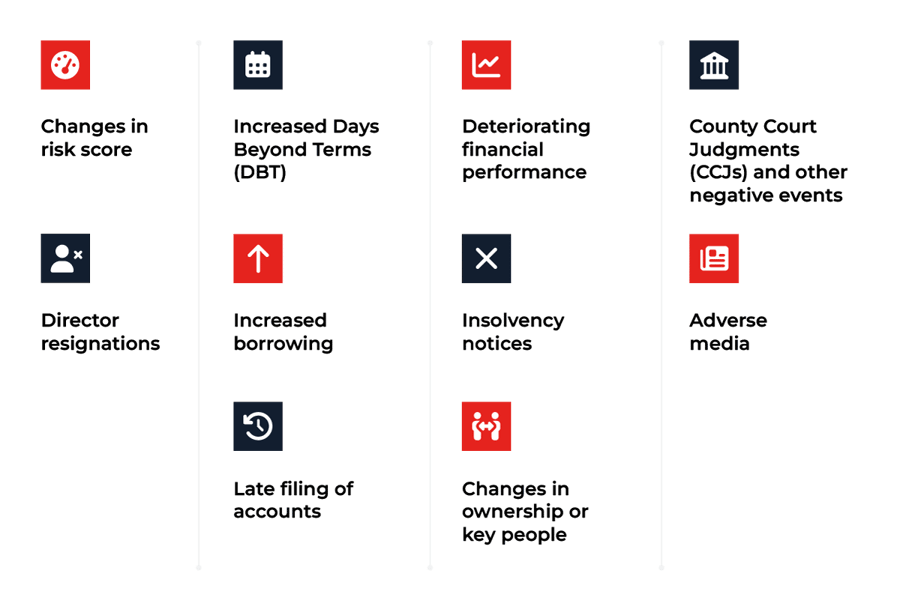
1. Major strategic changes
Sales, acquisitions, mergers and rebrands are often used as part successful growth strategies, so aren’t necessarily a sign of a business at risk of breaking down. However, no matter the reason, significant changes in ownership or business direction can introduce operational and financial risk.
The sale of WHSmith’s high street stores and resulting rebrand is a great example of this. While ownership changes can create opportunities, often they involve sweeping changes and restructuring plans to try and boost profitability.
Knowing about these events early and monitoring the performance of your customers is crucial to avoid getting caught out.
2. Cost-cutting programmes
When companies begin discussing restructuring, especially publicly, suppliers need to pay close attention.
Businesses typically don’t cut costs aggressively unless they are in financial trouble or are pre-empting a decline. While restructuring can be a positive step towards long-term recovery, the reality is that management is under pressure to preserve cash. In these situations, suppliers are often the first to be hit, whether that’s reduced spend, contract renegotiations, or being axed entirely.
3. Store closures
Most businesses aim to expand, so if they are closing stores, this is likely not a sign of a company growing.
Sometimes, closing underperforming stores can strengthen a business overall. However, it’s still a sign of difficulty, and the more stores they close, the higher the risk is to suppliers. Additionally, if you offer localised products, the closure of just one store can have a massive impact to you.
Shrinking operations usually indicates a business needs to act against financial pressures. Suppliers must assess at this point the impact that reduced operations could have and how to mitigate this.
4. Increasing economic pressure
It doesn’t matter how well run a business is; if the economic conditions are challenging, staying profitable can become luck of the draw.
Rising wage costs and energy prices, high inflation, geopolitical conflict and changes in consumer spending are all impacting businesses across the UK. Businesses with thin margins are even more exposed and may be unable to absorb additional costs. This is especially the case in retail, which is currently experiencing a high level of insolvencies.
Suppliers should aim to increase their monitoring activity to check whether these conditions are impacting their customers. After all, a customer that appeared stable 12 months ago may not be stable today.
5. Over reliance on a single customer
This may be one of the biggest risks to suppliers, but it’s also an area that you can control yourselves. If the loss of a single customer would significantly impact your cash flow, your business is already high risk.
Many businesses focus heavily on winning large contracts, but this dependency on a few customers rather than a diverse portfolio can leave businesses vulnerable if circumstances change. Ensuring you have a range of customers, rather than putting all your eggs in one basket, reduces the impact of any one customer experiencing financial difficulties.