







Fast, Reliable Risk Scores
Our 0–100 insolvency risk score updates daily to reflect the latest changes in a company’s status.
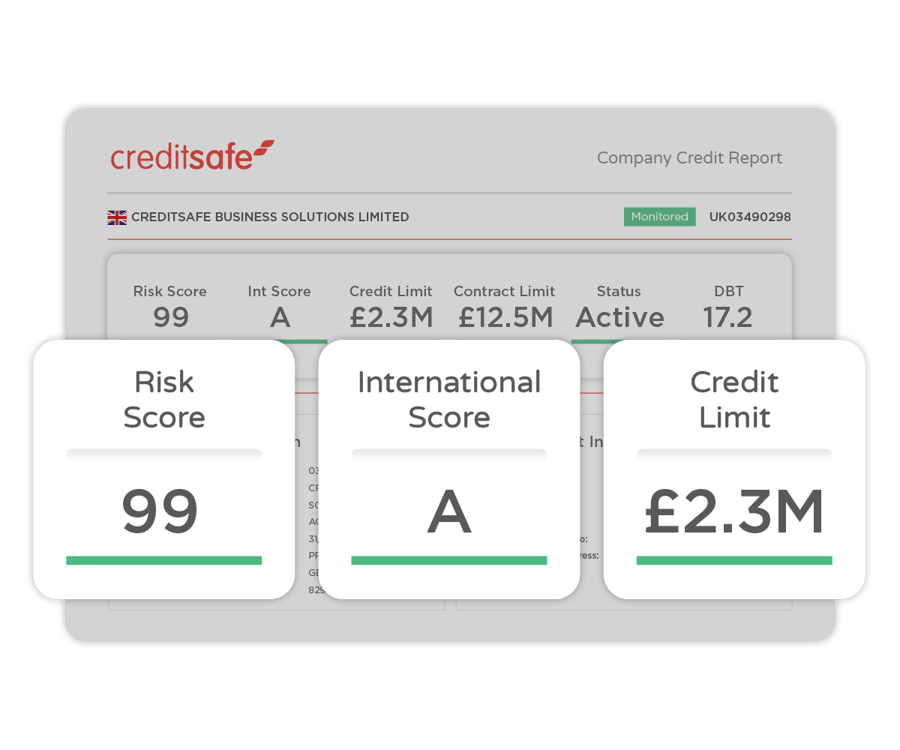
Get a clear picture of a company’s creditworthiness in seconds. Our Risk Score (0–100) predicts the likelihood of insolvency within 12 months, while the International Score (A–E) allows for easy comparison across countries. Recommended Credit Limits and Contract Limits help you set safe trading terms based on financial data and payment history.
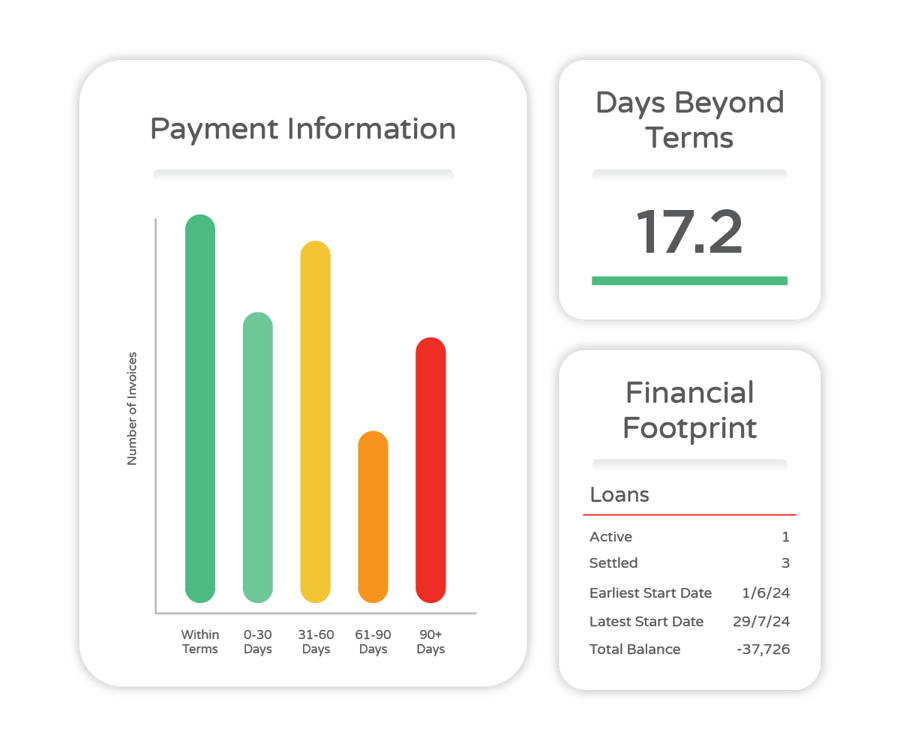
Get a complete picture of how businesses manage their obligations by combining supplier payment trends with commercial banking data. Track invoice payments and Days Beyond Terms (DBT) to identify slow payers, while monthly updates from major banks provide insights into loan and overdraft usage, cash balances, and repayment performance. Together, these insights reveal how companies really pay, helping you assess cash flow risk, lending exposure, and affordability with confidence.

Our reports include County Court Judgments (CCJs) updated daily from official court sources, as well as writs, profit warnings, and HMRC’s deliberate tax defaulters list. We also flag HM Court Notices such as insolvency petitions. Creditsafe Exceptions highlight irregular activity — like multiple CCJs, frequent director changes, or enquiry spikes — as early signs of trouble.
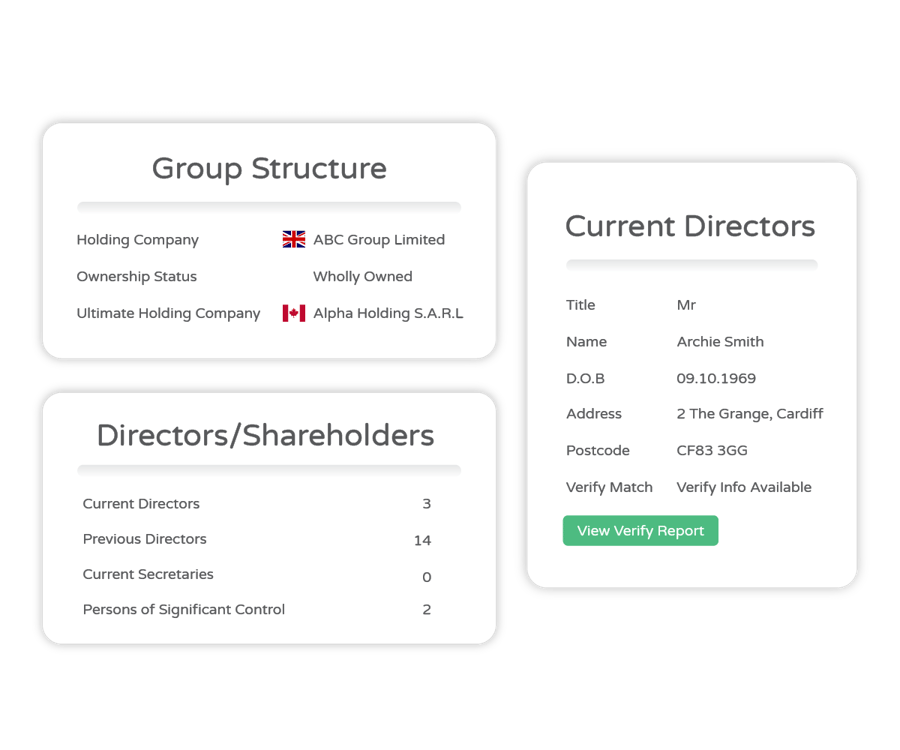
Identify directors (current and former), shareholders, Persons with Significant Control (PSC) and Ultimate Beneficial Owners (UBO) to understand ownership and influence. Then go further with Creditsafe Verify, which screens individuals against the electoral roll and flags if they have personal CCJs, are insolvent, or even deceased, helping you avoid fraudulent identities, disqualified directors, and hidden risks.
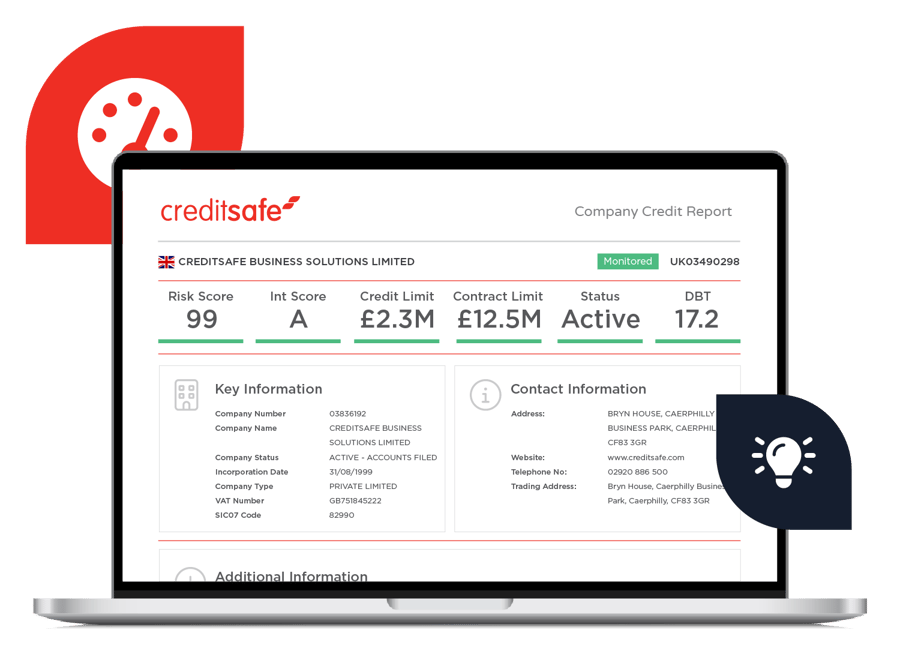
Creditsafe helps you avoid bad debt and reduce risk by giving you instant access to company credit scores, limits, and warning signs. Spot slow payers, monitor financial stability, and make confident credit decisions before you commit.
Our 0–100 insolvency risk score updates daily to reflect the latest changes in a company’s status.
Insights based on over 500 million invoices collected directly from our customer network.
Creditsafe Exceptions highlight irregular activity so you can act before issues appear in the financials.
Compare companies worldwide with our standardised A–E International Score.
A company credit report is a business intelligence report that helps organisations assess the financial stability, creditworthiness and potential risk of another company. Businesses use company credit reports to evaluate customers, suppliers, partners and prospects before entering into commercial relationships or extending credit.
A typical company credit report combines information from multiple sources, including company financials, payment behaviour, legal filings, director information, ownership structures and credit risk indicators. Together, this information provides a clearer picture of a company’s ability to meet its financial obligations and operate as a reliable trading partner.
A company credit score is a numerical indicator designed to summarise a company’s level of credit risk. It provides a quick assessment of how likely a business may be to meet its financial obligations.
A company credit report provides the detailed information behind that score. Rather than offering a single risk indicator, the report includes financial data, payment behaviour, legal records, ownership information and other factors that contribute to a company’s overall risk profile.
In simple terms, a company credit score provides a summary of risk, while a company credit report provides the evidence and context needed to understand that risk.
Company credit scores are typically influenced by a range of financial and operational indicators that help assess business risk.
Common factors include:
Credit scoring models differ between providers, but most use a combination of financial, legal and behavioural data to evaluate risk.
The information included in a company credit report may vary by provider and jurisdiction, but commonly includes:
These data points help businesses make more informed decisions about who they trade with and how much risk they are prepared to accept.
Businesses use company credit reports throughout the customer, supplier and partner lifecycle.
Common use cases include:
By using company credit reports, companies can make more informed decisions and reduce exposure to bad debt, supplier disruption and commercial risk.
Company credit reports help businesses identify potential risks before they become financial problems.
By reviewing a company’s creditworthiness, payment behaviour and financial stability before extending credit, businesses can make more informed decisions about who they trade with and on what terms.
Company credit reports can help organisations:
Used effectively, company credit reports form a key part of a broader credit risk management strategy, helping businesses protect cash flow and make more confident commercial decisions.