Note: This guide is for general information only and should not be treated as legal, financial or payments advice. Businesses should review their own payment controls, fraud policies and regulatory requirements.
What Is Bank Verification?
Plain English definition: Bank verification is the process of checking bank details before a payment or collection is made. Depending on the method used, it can validate the format and payment route, identify the financial institution, compare the account name and provide evidence that a person or business controls the account.
Bank verification helps businesses check account details before money is sent, collected or stored in a payment workflow. It can be used when onboarding suppliers, setting up customers for Direct Debit, validating refund details, checking payroll information or confirming that payment instructions match the intended recipient.
For finance, accounts payable, accounts receivable and onboarding teams, the goal is simple: reduce the chance of paying the wrong account, accepting invalid bank details or creating manual work caused by failed payments.
Depending on the check being performed, bank verification can help confirm whether:
- The account number and sort code are valid
- The bank branch or payment route exists
- The account name matches the intended individual or business
- The person or company appears to own or control the account
- The bank details are suitable for Direct Debit or payment collection
“With Creditsafe’s Bank Verification tool, the process is much more streamlined and efficient. Clients no longer need to provide extra documentation, and we can confidently ensure that payments are sent to the correct accounts.”
How Bank Verification Works
The exact process depends on the verification method, but most workflows follow a simple sequence.
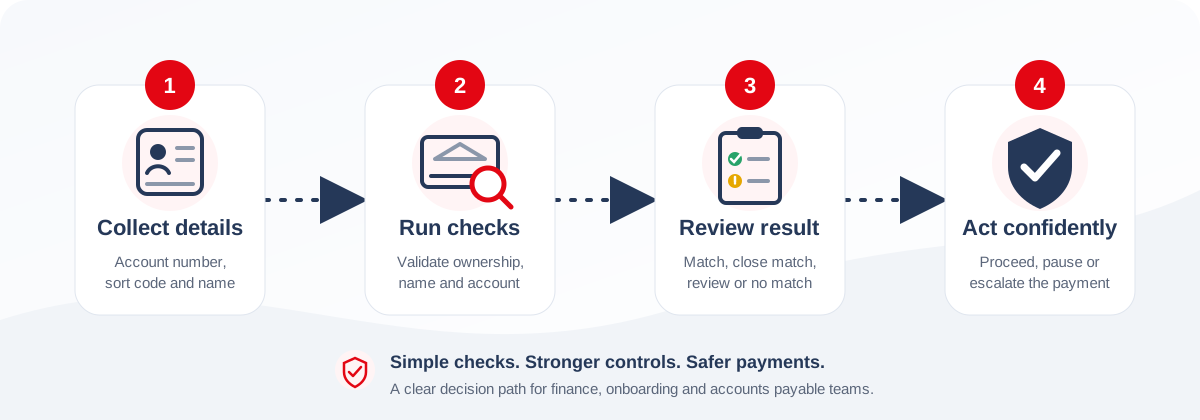
Collect bank details
Capture the account name, account number and sort code, or the relevant international banking information.
Validate the format
Check that the details follow the expected structure and that the bank route is recognised.
Run ownership and name checks
Compare the information with available banking data to identify a match, close match or mismatch.
Review the result
Approve valid details or pause the workflow when a result needs further investigation.
Store the audit trail
Record the result, reviewer, timestamp and any exception decision made.
UK and International Bank Verification Demo
Switch between UK Bank Verification and International IBAN verification types to see the different information collected, validated and returned.
- Checking account number…
- Validating sort code…
- Confirming account ownership…
- Matching payee name…
- Validating IBAN structure…
- Checking bank and country code…
- Confirming account ownership…
- Matching account name…
Types of Bank Verification Checks
Bank verification can involve several different checks. The right combination depends on whether you are paying a supplier, collecting Direct Debit details, onboarding a customer or validating payment information at scale.
Account and sort code validation
Checks whether the account number and sort code are formatted correctly and whether the payment route appears valid. This helps catch simple data entry errors before a payment is attempted.
Account ownership verification
Helps confirm whether the bank account appears to belong to the individual or business you are dealing with. This is valuable during supplier onboarding, customer onboarding and Direct Debit setup.
Confirmation of Payee or name matching
Checks whether the account name entered matches the name held by the receiving bank. Outcomes may include match, close match or no match.
IBAN and international bank validation
For international payments, IBAN validation helps check whether overseas bank account details follow the expected structure and may reduce errors in cross-border payment workflows.
| Check type | What it helps answer | Common use case |
|---|---|---|
| Sort code validation | Is the bank route valid? | Payment setup and data entry checks |
| Account validation | Do the account details appear valid? | Supplier, customer and payroll onboarding |
| Account ownership verification | Does this account appear to belong to the intended party? | Supplier fraud prevention and Direct Debit setup |
| Confirmation of Payee | Does the account name match the payee? | Before making bank transfers |
| IBAN validation | Are international bank details structured correctly? | Cross-border payments |
Supplier Bank Verification
Supplier bank verification helps accounts payable teams check that supplier payment details are valid before money is sent.
This is particularly important when:
- A new supplier is being onboarded
- An existing supplier changes bank details
- A high-value payment is due
- Payment instructions are received by email
- The supplier operates in a higher-risk sector or jurisdiction
Direct Debit Verification
Direct Debit verification helps businesses check bank details before payment collection begins.
Invalid or incorrect bank details can cause failed collections, delayed cash flow, extra administration and poor customer experience. Verifying account details at the point of setup helps reduce avoidable failures before the first payment is attempted.
For subscription businesses, lenders, utilities, insurers and service providers, this can help protect recurring revenue and reduce operational costs.
Bacs advises organisations using paperless Direct Debit to verify the customer and validate information such as their identity and account details. Businesses should also confirm whether the sort code supports Direct Debit Instructions before attempting collection.
What information can Direct Debit verification return?
When bank details are checked, the result can help confirm whether the account is suitable for Direct Debit collection before a mandate is set up or the first payment is attempted.
- Bank or financial institution identified
- Sort code valid and recognised
- Sort code and account number combination valid
- Direct Debit payments supported
- Bacs and other payment scheme support
- Account holder name checked
- Account ownership confirmed where available
- Unmatched or uncertain details flagged for review
A sort code identifies the bank or financial institution and can indicate which payment schemes it supports. However, a recognised sort code does not by itself confirm that an individual account exists or belongs to the person or business providing it. Account validation and ownership checks require additional information, such as the account number and account holder name.
Confirmation of Payee Explained
Confirmation of Payee is a name-checking process designed to help reduce misdirected payments and certain types of payment fraud.
It compares the account name entered by the payer with the name associated with the receiving account. The result helps the payer decide whether to proceed, amend the details or investigate further.
Confirmation of Payee is available across 99% of all UK bank accounts.
| Result | Meaning | Suggested action |
|---|---|---|
| Match | The name appears to match the account. | Proceed if other checks are satisfactory. |
| Close match | The name is similar but not exact. | Review spelling, trading names or legal entity names. |
| No match | The name does not appear to match the account. | Stop and verify directly before paying. |
| Unavailable | A result could not be returned. | Use alternative verification controls. |
International Bank Account Verification
Cross-border payments carry a higher risk of error than domestic transfers. A single incorrect digit in an IBAN, a mismatched bank identifier or an account name that does not align with the receiving bank's records can cause a payment to be delayed, rejected or sent to the wrong destination entirely.
Common causes of failed or delayed international payments include:
- Incorrectly formatted or mistyped IBANs
- Invalid or unrecognised bank and country codes
- Account names that do not match the receiving bank's records
- Sending to an account that cannot accept the payment method used
- Outdated or incorrectly recorded supplier and customer banking details
By validating IBAN structure, identifying the receiving bank and checking account details before a cross-border payment is sent, businesses can reduce the risk of failed transfers, minimise costly delays and give finance teams greater confidence when paying overseas suppliers, partners or employees.
Why Bank Verification Matters
Payment mistakes and fraud attempts can be expensive, disruptive and difficult to recover from. A single incorrect account number, intercepted invoice or fraudulent supplier bank change can lead to payments being sent to the wrong destination.
Check supplier and payee details before funds are released.
Validate bank details before Direct Debits, refunds or payouts are processed.
Reduce failed collections, returned payments and avoidable investigation work.
Bank verification is especially useful when payment details are entered manually, supplied by email, updated by a supplier or collected through an online form.
How Bank Verification Helps Prevent Fraud
Bank verification can reduce the risk of paying fraudulent or incorrect accounts by adding a check before money leaves the business.
It can support controls against:
- Invoice redirection fraud
- Supplier impersonation
- Business email compromise
- Authorised push payment fraud
- Fake customer or supplier onboarding
- Refund fraud
Can You Spot the Payment Risk?
A long-standing supplier emails your finance team saying they have changed bank details. The invoice amount is £48,000 and payment is due today. What should happen next?
Reducing Payment Failures
Bank verification is not only about fraud prevention. It also helps improve payment quality.
Common causes of failed payments include:
- Mistyped account numbers
- Incorrect sort codes
- Accounts not suitable for the payment method
- Names that do not match the account
- Outdated supplier or customer details
By validating bank details before they enter payment runs, Direct Debit instructions or refund workflows, businesses can reduce rework and improve customer and supplier experience.
Why Regulations Changed in 2024
On 7 October 2024, new rules introduced by the Payment Systems Regulator (PSR) made it mandatory for banks to reimburse victims of authorised push payment (APP) fraud — up to £85,000 per claim, split equally between the sending and receiving bank. The scale of the problem is significant.
£576.4m lost to APP fraud in 2025, up 19% year on year
Source: UK Finance Annual Fraud Report 2026
£85,000 maximum reimbursement per claim, split 50/50 between sending and receiving bank
Source: PSR PS24/7, effective 7 October 2024
99% of CHAPS and Faster Payments volume now covered by Confirmation of Payee
Source: PSR Specific Direction 17
While the reimbursement rules apply to consumers and micro-enterprises rather than larger businesses directly, the knock-on effect is real. Banks now bear financial exposure on both sides of a fraudulent payment, making them far more attentive to whether their business customers have verification controls in place. Businesses that cannot demonstrate they checked bank details before a payment are in a weaker position when attempting to recover funds.
Bank verification is the practical control that closes this gap — and the audit trail that shows you used it.
Common Bank Verification Use Cases
Check payment details before a supplier is approved.
Validate account details before collecting recurring payments.
Confirm account details before extending services or payment terms.
Reduce the risk of sending money to the wrong account.
Validate IBANs and overseas payment details.
Add extra checks before releasing large transfers.
Bank Verification Best Practices
- Verify before first payment: Do not wait until after a payment has failed or been misdirected.
- Re-check bank detail changes: Treat supplier bank changes as a fraud risk trigger.
- Use trusted contact methods: Confirm changes using known phone numbers or verified contacts, not only the email requesting the change.
- Combine with business verification: Check the company, directors and ownership as well as the bank account.
- Create an audit trail: Record verification outcomes, approvals and exceptions.
- Escalate no-match results: Do not ignore mismatches on high-value or high-risk payments.
How Strong Are Your Payment Controls?
Select the controls your organisation already uses to see your current payment-control score.
UK and international bank verification from one trusted provider
Creditsafe brings Confirmation of Payee, Direct Debit verification and IBAN checks together in one bank verification tool so you're not juggling multiple providers or manual processes to cover different payment types and geographies. Whether you're validating a UK payee or an overseas supplier, the checks you need are built in.
Confirmation of Payee and Direct Debit checks across 99% of UK bank accounts, helping you validate payee names, confirm ownership and reduce failed collections.
IBAN validation and bank identification across more than 200 countries, with Confirmation of Payee-style name matching available in supported markets.
Support supplier onboarding, payment changes, Direct Debit setup and customer onboarding through consistent verification checks, wherever your payments are going.
Bank Verification FAQs
What is bank verification?
Bank verification is the process of checking bank account details before making or collecting payments. It can help confirm whether details are valid and whether the account appears to belong to the intended individual or business.
How do you verify a bank account?
A bank account can be verified by checking the account number, sort code, account name, ownership details, IBAN or banking data depending on the method used and the payment workflow.
Can bank verification prevent fraud?
Bank verification can help reduce fraud by identifying mismatched or suspicious payment details before money is sent. It should be used alongside wider fraud controls and approval processes.
What is Direct Debit verification?
Direct Debit verification checks account details before a Direct Debit is set up or collected. It helps reduce failed collections caused by invalid or incorrect bank details.
What is Confirmation of Payee?
Confirmation of Payee is a name-checking process that compares the account name entered with the name held by the receiving bank. It helps users identify possible mismatches before paying.
Can businesses verify supplier bank details?
Yes. Supplier bank verification can be used during onboarding and when bank details change to help reduce payment errors and supplier impersonation fraud.